Pages

Thursday, 21 January 2016

Rival brands: friendly competition or battle that neither can ever win?

I have to agree with the age old phrase "competition drives innovation". The worlds best-marketed brands all seem to have one strong rival with each brand constantly trying to out-market the other. It  is these brands which I find fascinating and it is even more interesting to consider whether brands in fact, benefit from these huge rivalries.

Directly targeting or responding to the competition is highly common in marketing efforts, I have seen it in my own industry, telecoms, with ads such as these:
3 hit out at Vodafone customers with this banned ad
Vodafone's ad promising a Fixed Price for your entire contract

However, there are far more famous and controversial rivalries:

1. McDonalds vs Burger King


As I mentioned, innovation is key in beating your rivals and due to the fact that McDonalds and Burger King's value propositions are fairly homogeneous, there is a lot of mimicking from both sides. Big Mac, Whopper... are there really many differences? Both brands have sued each other for copyright infringement on a number of occasions. 
Burger King actually made a peace offering for just one day in this story, which was swiftly rejected by McDonalds!  However, what a great bit of PR for BK anyway, making them look like the soft, underdog!

2. Pepsi vs Coca-Cola

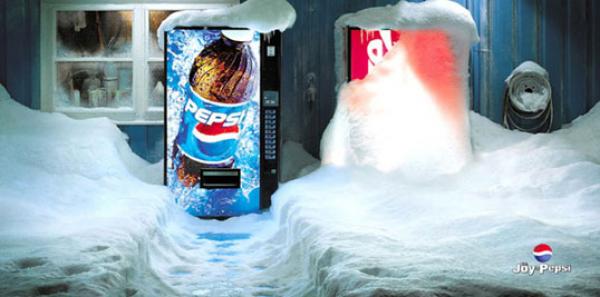
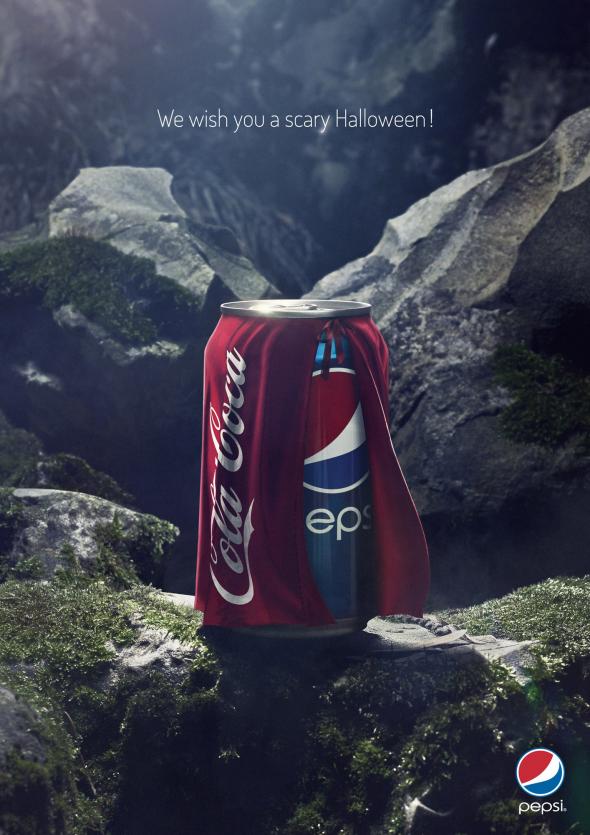
Perhaps one of the most historic rivalries, dating back to the early 1900s, and the creativity behind the rival campaigns is fantastic.

Pepsi are definitely more aggressive in their competitive attitude through advertising, but unfortunately Coke have held on to the top spot. Coke has become a name to replace the cola industry as a whole- who goes in to a bar and says "Can I have a vodka and Pepsi?". Coca-cola tend to stick to their traditional roots in terms of branding whereas Pepsi go modernistic, proving that being true to your roots pays off. Coke markets happiness with their 'Share a coke' campaign or their new slogan 'Taste the feeling', whereas Pepsi go for a 'cool' vibe with collaborations with NFL and David Beckham.


3. Apple vs Samsung


Samsung are definitely the Pepsi of the mobile technology world. Their dig at Apple (and Apple customers) below, indicates their willingness to take on the rivalry first hand:


You are often asked; are you an Apple or a Samsung person and it's rare that people switch between the two. I am an Apple user but of course since working at Vodafone my eyes have been opened to the world of Android and how much Android devices can really do. However, if you compare Samsung and Apple's marketing spend vs market share, the true stats really become clear:

Samsung: £8.4bn of marketing spend 19.9% of smartphone market share 15% of total operating income of smartphone makers
Apple: £1bn of marketing spend 14.6% of smartphone market share 92% of total operating income of smartphone makers

Whilst Samsung make phones to suit lots of markets, providing lower-range cheap smartphones as well as your S6 Edge's to a premium market, the numbers really do show that Apple's smaller range, however highly targeted to those who expect more from their phones, really does pay off. 


Hope you enjoyed this post, let me know your favourite brand rivalries, tweet me at @stefclarkx

Monday, 18 January 2016

What is a Product Manager?

I'm currently in Placement Two of my Graduate Programme at Vodafone which is a Product Manager role within the Innovation team. Now, when people ask my role, they often mishear my title and thing I say Project Manager! However, the role of Product Manager is distinctly different. If you're a recent graduate, student, interested in marketing roles or have even just heard of Product Managers within your organisation and wondered what the hell it is- let me fill you in on a Day in the Life of a Product Manager.

Product Managers are not a million miles away from Brand Managers, however this depends on the type of organisation. A firm with an umbrella brand and lots of sub-brands e.g. Unilever, Coca-Cola, Mars, Nestle etc. will probably have a lot more Brand Managers than an organisation which feeds from the strength one core brand e.g. Apple, McDonalds, Amazon, Samsung and my company, Vodafone, who primarily employ Product Managers. However, effectively the two roles are pretty similar.

On a very high level, Product Managers oversee everything which concerns a certain product. They try and drive usage/ sales/ downloads/ customer satisfaction/ whatever other KPIs marketers pluck out of their objectives and make sure the product is performing. This effectively means you have to make the maximum revenue from your product and ensure your product is doing exactly what it should be doing for the business. This of course, means you must align your product to fit in with the wider business strategy and listen to the needs of the business before you decide exactly how to market your product.

You must also be very close to and focused on the customer. Understand their every need and get feedback on the user experience, which includes a lot of testing, testing and more testing! As a Product Manager, there is also a technical understanding of your product/s needed on a higher level, to know exactly how they work, what is possible and how to develop them.

As all products go through a life cycle, it is important to understand the different times within product managing, right through from launch, growth, maturity, decline and then either rejuvenation or closing/ discontinuing a product. You as Product Manager will oversee all of these stages and
literally be the expert on this product for its entire life!

Launch

Before you can launch a product you need a need that this problem solves for the customer, backed up by a bunch of research! With a deep understanding of the market and your target audience, as well as a real passion for the product, as you are going to have to be the salesperson to every single person inside and outside of the business.

Growth

You then continually plan roadmaps for your product to understand exactly where you want it to go and how you are going to get it there. This might be working super closely with developers, marketing communications activity or user experience improvements. You have to have super attention to detail as you pick out every little nit-picky error or problem with your product and put it right! There are always problems along the way which need solving.

Maturity

This is where you can look at your product and gather enough data about it to understand exactly what customers like and dislike about it. Do you need to make a price change, completely change the product's features or invest heavily in marketing to keep your numbers up?

Decline

Upon the product's decline you can consider two options, closing the product or revitalising it entirely. The businesses' goals may have changed, the market may have changed or the product may simply be too costly to make a profit anymore. This is where you can consider targeting a new audience, changing the structure of the product or redesigning it.

My Role

My role within Product Management is of course within a mobile technology brand and I manage a number of apps. Day-to-day I may be speaking to app developers to improve our user experience on the apps, speaking to various functions within the business such as Brand to get one of our images in the app approved, Digital to get a webpage which mentions my app changed, CVM to promote our app through an email or SMS campaign, Customer Services to make sure the agents know exactly what to say if a customer asks a question about my product or even liaising with Market Research teams to understand how much customers are enjoying my apps!

The role is super varied and means you can really put your passions and energy in to one or two products and they are your entire responsibility- which can be a good OR bad thing, depending on how well your product is doing!

If you have any questions or are interested in a Product Management role, please tweet me at @stefclark

I'll do my next role profile within Placement 2!

Stephanie

Wednesday, 2 December 2015

Why Argos & eBay's distribution methods can work together in harmony

I have to say, as someone who is more-interested-than-most in the digital marketing space, eBay is one of the only brands I really pay attention to when it comes to their email marketing campaigns. They are often well-targeted, relevant and provide decent value. Hence I was pleasantly surprised to see this email in my inbox recently:


There was an existing partnership between Argos and eBay with many Argos product sold through eBay regularly. However, this extension of the way the channels work together is a great strategic move from both parties.

A few years ago, upon the spark of the digital age, which saw the likes of Woolworths, HMV and Habitat struggle- I was worried that Argos would simply be destined for the same fate. It was surely going to be out-priced, out-producted and out-branded by the likes of Amazon? However, by thinking and accepting that their existing distribution model wasn't going to be sustainable long-term, Argos have adapted their strategy which blurs the lines between the online world and bricks and mortar retailers.

I think the key to success in what Argos is doing is the fact they are so accessible, convenient and efficient. Their Click and Collect service was pioneering, their digital channels are fantastically-integrated with their retail channels and they partner with the best brands- often I don't even have to check if Argos stock something I just presume they will and I'm not often wrong. They also have great, local stores, you don't have to go in to a big town or city to find exactly what you are looking for.

However, this isn't just beneficial to Argos in terms of defining their brand as a digital, well-distributed service. eBay gain something they've never had before- a physical presence in the UK market. So many brands (especially those who are solely online) are realising the importance of an omni-channel experience and that 'human interaction' with the brand. By collaborating with Argos, eBay have a tangible setting in the form of hundreds of stores. 

eCommerce sold us the idea the home delivery is the way forward, however consumers are starting to realise that it is not as convenient as originally thought. Fear of leaving your house whilst waiting for a parcel or having to cart it home on the tube after having it delivered to work or worse, queuing in the post office depot on a Saturday morning- all build the case as to why click and collect has become a phenomenon! Amazon locker was a solution that had won over many consumers and now eBay is matching that with their own offering.... featuring humans!

Not only is this a great strategic move for the two brands, but this will ultimately provide a fantastic experience for the customer. They are able to drop whatever they've sold on eBay at a local Argos store (open late evenings and weekends), pay a rate for P&P which by far rivals the Post Office and provide a tracked and signed for parcel to the customer! 

In terms of change management, the organisational impact is minimal, the infrastructures for delivery and storage are already in place as Argos have been delivering their own products for years and as mentioned above, have the processes down to a T.

I look forward to hearing more about this exciting partnership!


Thursday, 26 November 2015

Is NEXT still relevant?

Since moving to Swindon in late-October, I can bet my friends and family would describe me as going a bit 'furniture mad'. I've been scouring every furniture site, warehouse, store for not only the best deals, but my perfect piece of furniture.

I used to sell sofas in NEXT during my first couple of years at university and lust over the beautiful sofas and perfectly matching furniture sets that were bang on-trend. Every colour, pattern, handle or design was so carefully thought out and I used to spend every 4-8pm shift on a Friday planning out my dream lounge or bedroom.

Finally, I have that dream flat! Furniture shopping has become my addiction and therefore I have spent a lot of time in NEXT stores searching for the perfect piece. However, after finding some great pieces, I never ended up actually going through with any of the purchases. I found almost all of NEXT's furniture products cheaper online. There were almost identical items for over half the price- I was not prepared to pay double for a brand name that I wouldn't have even been proud of owning.

One may argue, that although NEXT do not compete on price, they have a range of added-value benefits including fantastic distribution networks (you can click & collect before midnight the day before), great customer service (I remember giving someone a refund on a rug they bought 2 years before) and convenient locations (drive up, pick up). I agree these are fantastic benefits which the customer can see the real value in and perhaps why they can still act as a semi-premium retailer. However, I don't know if customers are really willing to pay double the price.

Not premium or value

There's no argument- NEXT's quality in terms of manufacturing and materials is unmatchable to other retailers on their scale. For such a huge retailer, their products do have that 'personal', do I dare say 'home-made' feel to them. It is evident that they beat the likes of The Range or IKEA when it comes to intricate and careful designs, however NEXT are not on a par with ultra-quality stores such as John Lewis or House of Fraser who have less stores, yet serve more carefully selected items from well-known, luxury brands.

I feel as though constantly acting as the 'middle' guy can be a win in some cases, NEXT for me is for the families who want to tap in to the luxury lifestyles, but aren't quite at the bespoke or tailored levels. However, not really defining your market could also be a real hindrance for NEXT as they are a reachable brand for most, yet I'm not sure how many of us would consider them as a treat if there is no real perceived product satisfaction, i.e. I was just as happy buying my mirrored dressing table from a never-heard-of online retalier than I would have been from NEXT, however had it been John Lewis I might have thought differently.

Discontinuing ranges

Another factor that deterred me from investing in furniture from NEXT, especially having had worked there, was there continual range refreshes. I know how fast paced their ranges are, not just furniture but clothing and accessories too. As I wanted to buy a couple of pieces at a time, I was relunctant to buy from NEXT for fear that the same range may have been discontinued the next month. Online, there is less of a fear due to the level of stock they can actually carry, due to the fact most of the businesses are literally- a warehouse and an office.

Price Promotions

NEXT don't ever do short-term reductions on their products. Other than 'buy two products, get £20 off each' which, as I said earlier, I was not in a position to do. I am a sucker for a reduction, no matter how small and if I see an item with 20% off it is usually the final push for me to click 'buy'. I know I am totally falling for marketing all of the time!

The infamous sale

Finally, one of the reasons I believe NEXT are irrelevant to me, as a consumer, is the fact I know that all of their products will be half price in 4 or 5 months time. It's the classic story of £100 on Christmas Eve, £10 on Boxing Day. I know this can happen with every retailer, but the face that NEXT places so much emphasis on their sales makes me think "Do I really want this enough to warrant not waiting for the sale? The answer is usually no.


I've placed the context of this blog post entirely on NEXT's furniture offering, however I believe it also applies to their clothing too. I am lacking a clear viewpoint of what they can offer me in exchange for hiked-up prices, a lack of confidence in the brand and a determination to get a better deal.


Monday, 28 September 2015

Will the Volkswagen brand ever recover?


I just turned to my father and said "Dad, I'm writing a blog post on VW and whether the brand can recover, what do you think?". My Dad is a loyal VW fan and has driven their cars for years and replied "I hope so, because it's a great brand". The company have created a hugely loyal customer base and have fastly become one of the biggest and most successful car brands in the world holding the largest market share in Europe. We are talking one of the biggest brands in the world here. I myself have a SEAT, one of the VW group brands and have always felt proud in the fact I am driving one of the most reliable, best quality car brands in the world (especially in comparison to my old Renault!).

A few days ago, the world was shocked to hear, a brand they had regarded as ethical, high quality and strong- had been involved in cheating diesel emissions test. I think the fact that the brand was previously seen as producing such reliable products, shocked and outraged the public more. Their stock price has tumbled and they have had to recall millions of vehicles, costing them extensively.

However, aside from the cost implications, the brand reputation has suffered immensely and will potentially continue to suffer now Audi's cars have been announced as part of the scandal. The question is, will they ever recover from this scandal?

People bought the cars in question based on the promise they had low emissions and in lying about this, VW have not only broken their customers trust, but the law! It is not a typical crisis in the fact this was a deliberate defiance, not an accident as we saw in the BP oil spill or a lack of due diligence within standardisation checks such as the Tesco horse meat scandal- no, this was knowingly and deliberately done by certain VW employees.

Volkswagen's CEO has resigned despite claiming to know nothing of the cheat, the company have also pledged over 6 billion euros in restoring consumer's trust and correcting any wrongdoing. They have also pulled any new marketing campaigns- yet this is a small step in restoring not only brand equity, but stop the company from going under as a whole.

It will be an interesting watch to see how and if the brand recover and what steps they take in a case which is not a typical crisis management.

Gamechangers and Rockstar games' resentment towards the BBC


The BBC docu-drama 'Gamechangers' has been receiving countless negative reviews and has created substantial PR around the Rockstar Games brand and the infamous video game 'Grand Theft Auto'. The film is "based on true events" surrounding the story of Devin Moore who killed three police officers, who some believe was due to him continually playing the violent video game.

It's well-worth a watch despite the reviews, I was intrigued to learn about the brand and the story as a whole, especially as it is partly-factual. Grand Theft Auto (GTA) is the best-selling entertainment product ever made and has caused controversy in the past for its violent and graphic nature. The creators- Rockstar Games are a British company who have received multiple awards for their gaming creativity and continue to sell millions of copies upon every release- despite the heightened press coverage surrounding the violent nature of the games. Their is a huge debate within the media as to whether violent video games lead their players to conduct violent acts and this is a key topic explored in the docu-drama.

Rockstar Games filed a lawsuit against the BBC as they felt the film did not show the brand nor the events that took place in a true light. Of course, Rockstar games would be against a film which a) painted them in a negative light and b) a piece of PR which they had no sort of say or control over.

The company reacted strongly to the film once it had ended, publishing this tweet:

At first, you would have thought this might be a potential PR crisis for the brand, but in fact, judging by twitter, TV reviews, blog posts and news articles- consumers seem to be siding with Rockstar Games over the BBC:


The gaming industry as a whole is very protective over its makers and they gain a lot of respect by their fans. GTA is also one of Britain's most successful exports and therefore people are very protective over it, especially those who enjoy playing it. Ultimately, if anything, this has painted the BBC in a negative light.

It is interesting to see how something which may be a potential crisis for a brand, can actually leave their customers feeling closer and more positively towards it. Docu-dramas/ documentaries about brands and companies do not usually provide this result- as is the case with Blackfish, the documentary on Sea World which has lead to their profits downfalling ever since. Consumers' morals are so important within marketing and can often erase any sort of positive associations one has with a brand, Sea World was once so loved and had really strong, positive brand associations surrounding family, love, protection and care for animals and what Blackfish has done is detrimental to all of the above. 

However, GTA lovers seem to disagree with what has been presented to them in terms of a moral argument. Perhaps their needs to be further evidence or, sadly, another disaster which can be linked to playing the games, until consumers will react negatively towards them. 

Tuesday, 22 September 2015

The Sony Experience in Tokyo

I recently got back from a trip to Asia, including a week in Tokyo. Whilst I was there I saw a crazy amount of fascinating things, but one thing that really caught my eye was the way that Japanese people absolutely love brands. I believe over there they have even more emotional connection to brands than we do- however for completely different reasons. For example, they love designer clothes such as Gucci, Prada etc. but not to show status or wealth such as the Western world, but to indicate quality investment and good money management. I also noticed that despite an influence from the Western world- particularly the U.S., Japanese people love Japanese heritage and culture.

One particular brand which is celebrated and appreciated in Japan, one of, if not the most famous brand to come out of Japan- SONY. I was lucky enough to have the chance to visit the SONY experience centre in Ginza, Tokyo- the technology area of the city where the latest innovations are showcased. The SONY building is technically a 'showroom', but it was so different from any showroom I've ever visited before.

SONY have actually been able to create a free, fun and interesting tourist attraction which hundreds of people flock to see and experience. As everything was in Japanese (of course), I had no idea what I was about to experience before I stepped through the doors!

The whole centre was a showcase of the latest SONY products and effectively was a shop, but with a high focus on experience, understanding and a 'try before you buy' attitude. On the bottom floor was a huge aquarium, which I believe acts as a 'hook' to get customers through the door, but each fish tank was filled with beautiful fish and lined with dozens of SONY cameras which could be demoed whilst you tried to take photos of the sea of colours you could see before you.

Me and my cousin Mya in the SONY building aquarium, in a whale shark's jaw!


Camera demos within the SONY aquarium

Then as you went up the various floors within the centre, each floor was dedicated to a 'sense' or in other words a SONY product range, phones, tablets, laptops, speakers, TVs etc.

One of my masterpieces taken with a SONY camera

Each floor was totally interactive and didn't focus on salesy messages or price promotions, just purely letting the products speak for themselves and letting customers experience the SONY brand wholeheartedly- even the lifts were the height of technology (although being absolutely rammed full of Japanese tourists)

A floral display with ultra HD lenses to use


The centre also featured a customer service/ advice centre and lots of staff on hand to help. My favourite floor was the top floor which brought most of the products together to create an absolutely beautiful film, shot on a small island off the coast of Japan, featuring their beautiful marine life and mainly- the whale shark. This not only was shown on their enormous SONY TV, but had music blasting from their speakers, was shot on their underwater camera and used various filming equipment that was all available to buy. This really demonstrated how powerful the products were and what they were capable of. Throughout the film, the camera equipment used in each section popped up at the bottom.

For gadget lovers, the SONY centre is an absolute must, but even for little old-me, it was still worth a visit (not only because my marketing geek sensor was at an all time high) but also just to learn more about the brand, their commitment to innovation in technology and it was fun! There is even a SONY museum, restaurants and souvenir shops- they have really gone out to make this more than just a 'department' store.

Why is this such a great example of a fantastic retail experience?

Of course, this is an extreme example and it would be impossible to turn every retail store in to the phenomenon of the SONY building, but there are lots retailers can learn from SONY.

1. People like to see, hear, touch, smell, taste things

Interaction with products and brands creates an emotional attachment between a person and a brand, by effectively 'playing' with products, we imagine owning them and can remember them much more at points of purchase than seeing a TV advert or a review in a magazine. 

2. A prestigious brand means people will actually want to learn more about you

We all know the SONY brand, the SONY centre is not there to create brand awareness or as a status symbol in the Ginza district. It doesn't need to be, people will actually go to the area just to visit the centre. We've been brought up with SONY products, they are universally considered as valued possessions, back to the walkman and the more recent Xperia products. They create awe-inspiring products which make customers inquisitive about the technology behind them a.k.a. an opportunity for a sales experience. Create a prestigious brand and you can experiment with what you do to explain it.

3. Create loyal customers and you can start to create 'fandom's'

To SONY building was an absolutely technology geek haven- for SONY fans there is nothing better! The fact they have a brand following is any marketers dream! Brand ambassadors are worth much more to any brand than lots of marketing activities!

4. Bring your brand to life

Ultimately, a brand should have a personality and by experiencing this first hand through the SONY building, customers can understand this concept much more clearly.