Pages

Showing posts with label branding. Show all posts

Thursday, 21 January 2016

Rival brands: friendly competition or battle that neither can ever win?

I have to agree with the age old phrase "competition drives innovation". The worlds best-marketed brands all seem to have one strong rival with each brand constantly trying to out-market the other. It  is these brands which I find fascinating and it is even more interesting to consider whether brands in fact, benefit from these huge rivalries.

Directly targeting or responding to the competition is highly common in marketing efforts, I have seen it in my own industry, telecoms, with ads such as these:
3 hit out at Vodafone customers with this banned ad
Vodafone's ad promising a Fixed Price for your entire contract

However, there are far more famous and controversial rivalries:

1. McDonalds vs Burger King


As I mentioned, innovation is key in beating your rivals and due to the fact that McDonalds and Burger King's value propositions are fairly homogeneous, there is a lot of mimicking from both sides. Big Mac, Whopper... are there really many differences? Both brands have sued each other for copyright infringement on a number of occasions. 
Burger King actually made a peace offering for just one day in this story, which was swiftly rejected by McDonalds!  However, what a great bit of PR for BK anyway, making them look like the soft, underdog!

2. Pepsi vs Coca-Cola

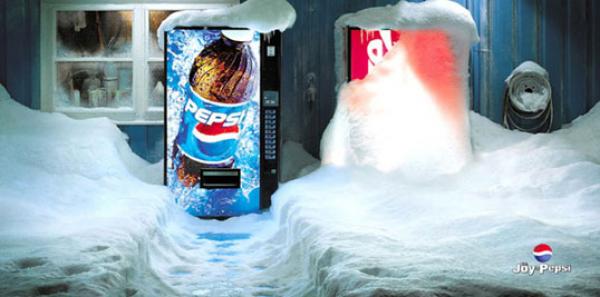
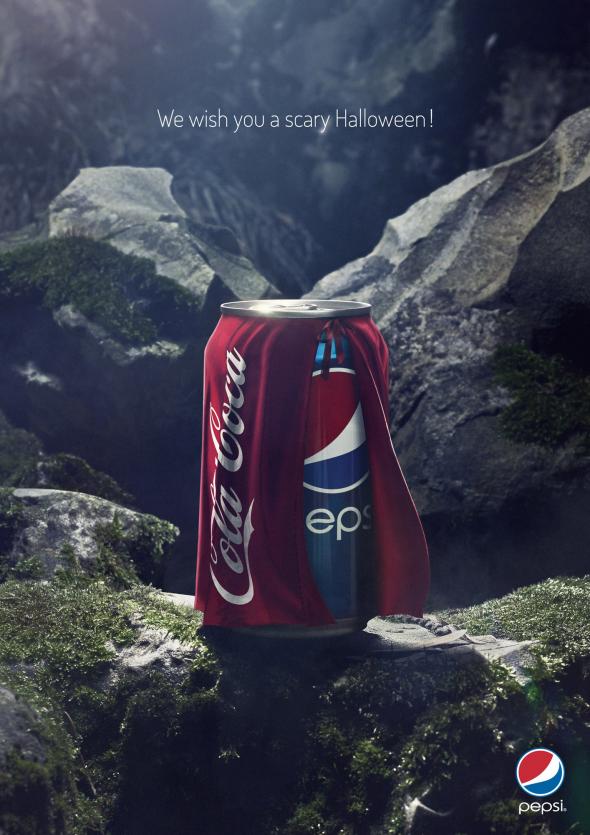
Perhaps one of the most historic rivalries, dating back to the early 1900s, and the creativity behind the rival campaigns is fantastic.

Pepsi are definitely more aggressive in their competitive attitude through advertising, but unfortunately Coke have held on to the top spot. Coke has become a name to replace the cola industry as a whole- who goes in to a bar and says "Can I have a vodka and Pepsi?". Coca-cola tend to stick to their traditional roots in terms of branding whereas Pepsi go modernistic, proving that being true to your roots pays off. Coke markets happiness with their 'Share a coke' campaign or their new slogan 'Taste the feeling', whereas Pepsi go for a 'cool' vibe with collaborations with NFL and David Beckham.


3. Apple vs Samsung


Samsung are definitely the Pepsi of the mobile technology world. Their dig at Apple (and Apple customers) below, indicates their willingness to take on the rivalry first hand:


You are often asked; are you an Apple or a Samsung person and it's rare that people switch between the two. I am an Apple user but of course since working at Vodafone my eyes have been opened to the world of Android and how much Android devices can really do. However, if you compare Samsung and Apple's marketing spend vs market share, the true stats really become clear:

Samsung: £8.4bn of marketing spend 19.9% of smartphone market share 15% of total operating income of smartphone makers
Apple: £1bn of marketing spend 14.6% of smartphone market share 92% of total operating income of smartphone makers

Whilst Samsung make phones to suit lots of markets, providing lower-range cheap smartphones as well as your S6 Edge's to a premium market, the numbers really do show that Apple's smaller range, however highly targeted to those who expect more from their phones, really does pay off. 


Hope you enjoyed this post, let me know your favourite brand rivalries, tweet me at @stefclarkx

Monday, 18 January 2016

What is a Product Manager?

I'm currently in Placement Two of my Graduate Programme at Vodafone which is a Product Manager role within the Innovation team. Now, when people ask my role, they often mishear my title and thing I say Project Manager! However, the role of Product Manager is distinctly different. If you're a recent graduate, student, interested in marketing roles or have even just heard of Product Managers within your organisation and wondered what the hell it is- let me fill you in on a Day in the Life of a Product Manager.

Product Managers are not a million miles away from Brand Managers, however this depends on the type of organisation. A firm with an umbrella brand and lots of sub-brands e.g. Unilever, Coca-Cola, Mars, Nestle etc. will probably have a lot more Brand Managers than an organisation which feeds from the strength one core brand e.g. Apple, McDonalds, Amazon, Samsung and my company, Vodafone, who primarily employ Product Managers. However, effectively the two roles are pretty similar.

On a very high level, Product Managers oversee everything which concerns a certain product. They try and drive usage/ sales/ downloads/ customer satisfaction/ whatever other KPIs marketers pluck out of their objectives and make sure the product is performing. This effectively means you have to make the maximum revenue from your product and ensure your product is doing exactly what it should be doing for the business. This of course, means you must align your product to fit in with the wider business strategy and listen to the needs of the business before you decide exactly how to market your product.

You must also be very close to and focused on the customer. Understand their every need and get feedback on the user experience, which includes a lot of testing, testing and more testing! As a Product Manager, there is also a technical understanding of your product/s needed on a higher level, to know exactly how they work, what is possible and how to develop them.

As all products go through a life cycle, it is important to understand the different times within product managing, right through from launch, growth, maturity, decline and then either rejuvenation or closing/ discontinuing a product. You as Product Manager will oversee all of these stages and
literally be the expert on this product for its entire life!

Launch

Before you can launch a product you need a need that this problem solves for the customer, backed up by a bunch of research! With a deep understanding of the market and your target audience, as well as a real passion for the product, as you are going to have to be the salesperson to every single person inside and outside of the business.

Growth

You then continually plan roadmaps for your product to understand exactly where you want it to go and how you are going to get it there. This might be working super closely with developers, marketing communications activity or user experience improvements. You have to have super attention to detail as you pick out every little nit-picky error or problem with your product and put it right! There are always problems along the way which need solving.

Maturity

This is where you can look at your product and gather enough data about it to understand exactly what customers like and dislike about it. Do you need to make a price change, completely change the product's features or invest heavily in marketing to keep your numbers up?

Decline

Upon the product's decline you can consider two options, closing the product or revitalising it entirely. The businesses' goals may have changed, the market may have changed or the product may simply be too costly to make a profit anymore. This is where you can consider targeting a new audience, changing the structure of the product or redesigning it.

My Role

My role within Product Management is of course within a mobile technology brand and I manage a number of apps. Day-to-day I may be speaking to app developers to improve our user experience on the apps, speaking to various functions within the business such as Brand to get one of our images in the app approved, Digital to get a webpage which mentions my app changed, CVM to promote our app through an email or SMS campaign, Customer Services to make sure the agents know exactly what to say if a customer asks a question about my product or even liaising with Market Research teams to understand how much customers are enjoying my apps!

The role is super varied and means you can really put your passions and energy in to one or two products and they are your entire responsibility- which can be a good OR bad thing, depending on how well your product is doing!

If you have any questions or are interested in a Product Management role, please tweet me at @stefclark

I'll do my next role profile within Placement 2!

Stephanie

Monday, 28 September 2015

Will the Volkswagen brand ever recover?


I just turned to my father and said "Dad, I'm writing a blog post on VW and whether the brand can recover, what do you think?". My Dad is a loyal VW fan and has driven their cars for years and replied "I hope so, because it's a great brand". The company have created a hugely loyal customer base and have fastly become one of the biggest and most successful car brands in the world holding the largest market share in Europe. We are talking one of the biggest brands in the world here. I myself have a SEAT, one of the VW group brands and have always felt proud in the fact I am driving one of the most reliable, best quality car brands in the world (especially in comparison to my old Renault!).

A few days ago, the world was shocked to hear, a brand they had regarded as ethical, high quality and strong- had been involved in cheating diesel emissions test. I think the fact that the brand was previously seen as producing such reliable products, shocked and outraged the public more. Their stock price has tumbled and they have had to recall millions of vehicles, costing them extensively.

However, aside from the cost implications, the brand reputation has suffered immensely and will potentially continue to suffer now Audi's cars have been announced as part of the scandal. The question is, will they ever recover from this scandal?

People bought the cars in question based on the promise they had low emissions and in lying about this, VW have not only broken their customers trust, but the law! It is not a typical crisis in the fact this was a deliberate defiance, not an accident as we saw in the BP oil spill or a lack of due diligence within standardisation checks such as the Tesco horse meat scandal- no, this was knowingly and deliberately done by certain VW employees.

Volkswagen's CEO has resigned despite claiming to know nothing of the cheat, the company have also pledged over 6 billion euros in restoring consumer's trust and correcting any wrongdoing. They have also pulled any new marketing campaigns- yet this is a small step in restoring not only brand equity, but stop the company from going under as a whole.

It will be an interesting watch to see how and if the brand recover and what steps they take in a case which is not a typical crisis management.

Gamechangers and Rockstar games' resentment towards the BBC


The BBC docu-drama 'Gamechangers' has been receiving countless negative reviews and has created substantial PR around the Rockstar Games brand and the infamous video game 'Grand Theft Auto'. The film is "based on true events" surrounding the story of Devin Moore who killed three police officers, who some believe was due to him continually playing the violent video game.

It's well-worth a watch despite the reviews, I was intrigued to learn about the brand and the story as a whole, especially as it is partly-factual. Grand Theft Auto (GTA) is the best-selling entertainment product ever made and has caused controversy in the past for its violent and graphic nature. The creators- Rockstar Games are a British company who have received multiple awards for their gaming creativity and continue to sell millions of copies upon every release- despite the heightened press coverage surrounding the violent nature of the games. Their is a huge debate within the media as to whether violent video games lead their players to conduct violent acts and this is a key topic explored in the docu-drama.

Rockstar Games filed a lawsuit against the BBC as they felt the film did not show the brand nor the events that took place in a true light. Of course, Rockstar games would be against a film which a) painted them in a negative light and b) a piece of PR which they had no sort of say or control over.

The company reacted strongly to the film once it had ended, publishing this tweet:

At first, you would have thought this might be a potential PR crisis for the brand, but in fact, judging by twitter, TV reviews, blog posts and news articles- consumers seem to be siding with Rockstar Games over the BBC:


The gaming industry as a whole is very protective over its makers and they gain a lot of respect by their fans. GTA is also one of Britain's most successful exports and therefore people are very protective over it, especially those who enjoy playing it. Ultimately, if anything, this has painted the BBC in a negative light.

It is interesting to see how something which may be a potential crisis for a brand, can actually leave their customers feeling closer and more positively towards it. Docu-dramas/ documentaries about brands and companies do not usually provide this result- as is the case with Blackfish, the documentary on Sea World which has lead to their profits downfalling ever since. Consumers' morals are so important within marketing and can often erase any sort of positive associations one has with a brand, Sea World was once so loved and had really strong, positive brand associations surrounding family, love, protection and care for animals and what Blackfish has done is detrimental to all of the above. 

However, GTA lovers seem to disagree with what has been presented to them in terms of a moral argument. Perhaps their needs to be further evidence or, sadly, another disaster which can be linked to playing the games, until consumers will react negatively towards them. 

Tuesday, 1 April 2014

Inside Rolls-Royce

I've been watching the 'Inside...' series on 4OD, a must-watch if you are interested in the luxury goods market!
I especially loved the Rolls-Royce episode which gave an insight into the companies head office and the sales tactics used with high profile customers. Rolls-Royce were creating the Celestial Phantom- their most expensive model ever, containing hundreds of diamonds and documentary shows the rigorous process which is undertaken at the factory and during the design process. Clearly for such a prestigious brand, their cars sell themselves due to the status and authority that comes from owning one of the cars.


However, I was interested to see the types of marketing strategies that Rolls-Royce use in order to target such a highly regarded audience. The typical Rolls-Royce customer may be spending well over £50,000 and almost as much on optional extras to add to the car, therefore the customer service they recieve is fundamental to their loyalty to the brand.

The documentary displayed that most Rolls-Royce customers own 4 or 5 vehicles and therefore retaining such customers is a key priority in their marketing strategy. The salesmen in the car showrooms are highly trained, just as with any car show room, however it is their personal connection with the Rolls-Royce brand that means their passion is revealed and hopefully passed on the customer.


One of the key PR strategies used by the company, is the opportunity for key members of the press, celebrities and other senior influencers to test out the vehicles on a race track, in the hopes that they may write a review/speak about the experience and even that they may be potential buyers... this is classic 'try before you buy' but also an example of getting opinion leaders to form their own recommendations of products. They are also attracting a new selection of young, cool, hip customers which is important to help the brand progress in the future.

The fact that Rolls-Royce are perfectionists when it comes to product design and quality means that they are renowned for providing a consistently impeccable product- there are no reports of one-off disaster products or bad customer experiences as the product checking and factory processes are so strict that it simply doesn't happen at Rolls-Royce! This in itself is a fantastic example of PR!!

 It would be an absolute dream to work in the marketing department at Rolls-Royce, the staff seem to have an extreme passion and love for the brand and their marketing strategy is unique, admirable and seems to work to target customers who enjoy the extremely finer things in life!!

You can watch the show on 4OD- let me know your thoughts!

Steph

Thursday, 10 October 2013

IBM Business Connect 2013

Hello there! So this week I was lucky enough to get the chance to attend one of IBM's biggest conferences in our events calendar- Business Connect is an all-day event and is held at various locations across the globe! The conference focuses on technology and innovation in IBM's areas of expertise: social, mobile, cloud, analytics, big data etc. The event was held at Twickenham Stadium and due to IBM's partnership with Rugby Football Union, the entire event was rugby themed. As Registrations started at 7:30- I had a very early start and decided to stay with my friend in London- this was my view of Canary Wharf at 5:30am
Very early start indeed!

I arrived at Twickenham Stadium and I was interested to see how the entire conference area had been transformed into an IBM event by the use of fantastic branding- the rooms looked great!
I was quite lucky to be able to watch the speeches as I was working inside the main auditorium, I was able to meet David Stokes- CEO of IBM UK which was such a great experience! Then I listened to his speech about the future of technology- he said that 25% of future marketing jobs will have the need for a background in technology- and he predicted that the implementation of Cloud will produce a huge amount of jobs in the next few years- something worth thinking about taking an interest in!!


David Stokes on stage 

Throughout the day there were lots of smaller debates and workshops for the deligates, business partners and IBMers to attend. I was mainly working behind the scenes. I had a great chance to see how such a large scale event is run- and ultimately how well IBM present themselves at their own events and how great the feedback from attendees is!

I also got a sneaky chance to sit in IBM's corporate hospitality box at Twickenham Stadium and have a look at the stadium!
 Here's a selfie of me in the stadium!!!

After a very long, but interesting and rewarding day, I got to hear a speech by Ben Kay, former Rugby World Cup Champion.
Here's Ben Kay on stage

He spoke about Leadership, Motivation, Determination, Teamwork and Discipline and how these strengths helped his team win the world cup. He also spoke about how these strengths can be applied to Business.

It was a great day and I was very lucky to be able to attend!

Steph